

A healthy lawn comes down to three habits done consistently: watering, mowing, and fertilizing. It sounds simple, but most lawn problems trace back to getting one of these three basics wrong. Here’s a beginner-friendly breakdown of each one, along with how they work together to keep grass looking its best throughout the growing season.
Watering the Right Way
Most new lawn owners either overwater or underwater without realizing it. The general rule is about one to one and a half inches of water per week, including rainfall, delivered in fewer, deeper sessions rather than frequent light sprinkles.
Deep, infrequent watering encourages roots to grow further down into the soil, which makes grass more resilient during hot, dry stretches. Frequent shallow watering does the opposite, training roots to stay near the surface where they’re more vulnerable to heat and drought stress. A simple way to check if watering is working is to see how deep the moisture actually reaches after a session, since surface dampness alone doesn’t mean the roots are getting what they need.
Morning is the best time to water, ideally before 10 a.m. Watering in the evening leaves grass damp overnight, which creates favorable conditions for fungal growth.
Mowing the Right Way
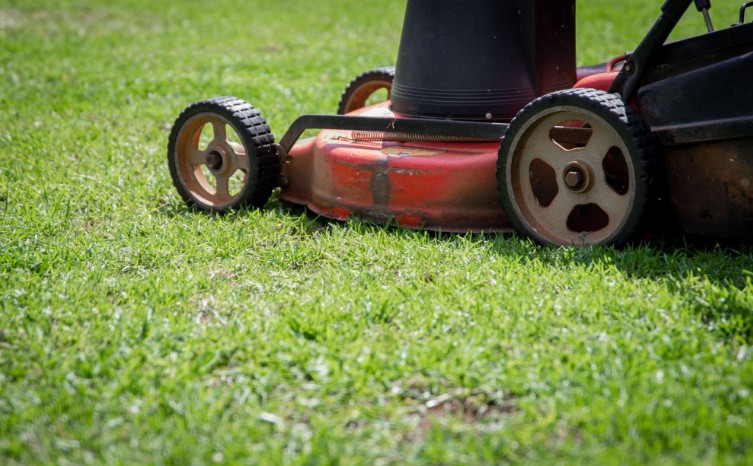
Mowing height matters more than most beginners expect. Cutting grass too short weakens it and exposes the soil to sunlight, which gives weeds an easier opportunity to take hold. Most common lawn grasses are best kept between three and four inches tall, though the ideal height varies somewhat depending on the specific grass type.
The one-third rule is worth remembering: never cut more than a third of the grass blade’s height in a single mow. Cutting more than that stresses the grass and can leave it looking patchy or discolored for days afterward, especially during hot summer stretches when grass is already under stress.
Keeping mower blades sharp also matters. Dull blades tear grass instead of cutting it cleanly, which leaves ragged edges that are more vulnerable to disease and slower to heal.
Fertilizing the Right Way
Fertilizer feeds the lawn the nutrients it needs to grow thick and green, but timing and amount matter as much as the fertilizer itself. Most lawns benefit from fertilizing in early spring and again in fall, with cool-season grasses generally needing more attention in fall and warm-season grasses needing more in late spring. Choosing a slow-release formula also helps avoid the growth spurts and burn risk that come with fast-release products.
Over-fertilizing is a common beginner mistake. Too much fertilizer can burn grass, cause excessive growth that outpaces mowing, or run off into storm drains rather than being absorbed by the lawn. Following the application rate on the product label, rather than assuming more is always better, prevents most of these issues and saves money on products that would otherwise go to waste.
Knowing Your Grass Type
Not all grass responds the same way to the same care routine. Cool-season grasses, common in northern climates, grow most actively in spring and fall and tend to go dormant during peak summer heat. Warm-season grasses, more common in southern climates, do the opposite, thriving in summer heat and going dormant during cooler months.
Watering, mowing height, and fertilizing schedules should all shift slightly depending on which category a lawn falls into, since applying a northern lawn’s schedule to a southern lawn, or vice versa, often leads to disappointing results.
Soil Health Matters Too
Watering, mowing, and fertilizing all work better when the soil underneath is healthy. Compacted soil makes it harder for water, air, and nutrients to reach grass roots, which is why aerating compacted areas once or twice a year can noticeably improve how well a lawn responds to routine care.
A simple soil test, available inexpensively through most garden centers or local extension offices, reveals pH levels and nutrient deficiencies that might be holding a lawn back even when watering and mowing are done correctly. Testing before adding fertilizer can also prevent adding nutrients the soil doesn’t actually need.
When Good Care Isn’t Enough
Even lawns that get consistent watering, mowing, and fertilizing can still develop problems. Weeds, bare patches, and discoloration don’t always mean something was done wrong. Sometimes they’re a sign of an underlying issue, whether that’s soil compaction, a pest problem, or a fungal issue that basic care alone won’t fix, especially when a lawn has years of neglect to recover from before routine care was established.
If a lawn is still showing signs of trouble despite following these basics, this breakdown of common lawn problems walks through what those symptoms are actually telling you, which is a useful next step for figuring out what’s really going on beneath the surface rather than continuing to guess.
Common Beginner Mistakes to Avoid
A few habits trip up new lawn owners more than anything else. Watering on a fixed schedule regardless of weather, rather than adjusting for rainfall, wastes water and can actually harm the lawn during wet stretches. Mowing whenever it’s convenient rather than when the grass actually needs it, especially letting it grow too tall between cuts, leads to scalping and stress once mowing finally happens. And treating fertilizer as a one-time fix rather than a seasonal habit means a lawn never gets the steady nutrition it needs to stay consistently healthy.
Building a Simple Routine
The lawns that stay consistently healthy usually aren’t the ones getting the most attention. They’re the ones getting the right attention on a consistent schedule. Watering deeply a couple of times a week, mowing at the correct height on a regular basis, and fertilizing at the right times each year covers the fundamentals most lawns actually need.
Starting with these three basics, and paying attention to how the lawn responds over a full season, gives any beginner a solid foundation before worrying about more advanced lawn care techniques. Small adjustments based on how the grass actually looks and feels tend to matter more than following a rigid schedule to the letter.
Final Thoughts
Lawn care doesn’t have to be complicated to be effective. Getting watering, mowing, and fertilizing right, and understanding how they work together with the soil underneath, solves the majority of issues most beginners run into. Consistency matters more than perfection, and a lawn cared for with these basics in mind will show noticeable improvement within a single growing season.