
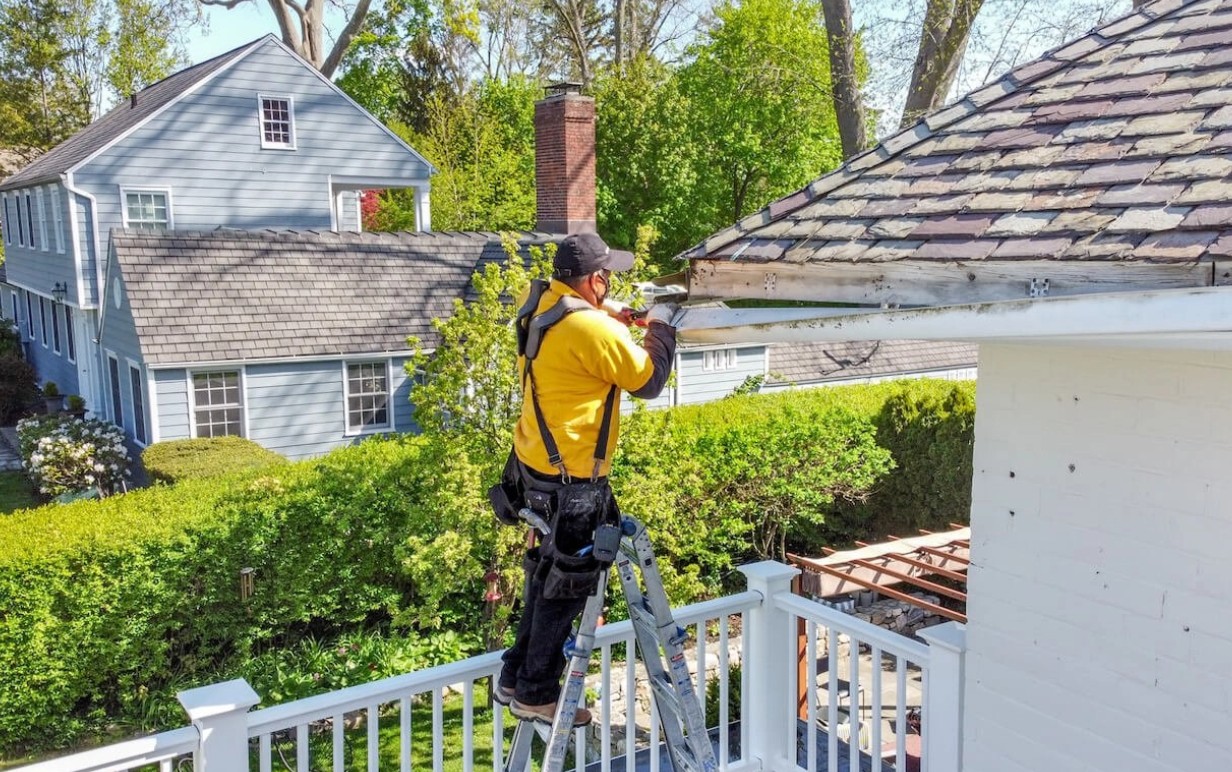
Nobody thinks much about their gutters. They just hang up there, doing their job, until one day they don’t, and that’s usually when homeowners start noticing water where it shouldn’t be. A damp patch on the ceiling. A weird smell in the basement. Paint bubbling on the siding. Most of the time, the real problem started months earlier, quietly, in a system that could have used professional gutter repair services long before things got this bad.
Here’s the thing about gutters: the warning signs are almost never dramatic. There’s no siren going off. Instead, you get small clues, a little sag here, a stain there, and if you catch them early, you’re looking at a quick fix. Miss them, and you’re looking at foundation work, mold remediation, or a rebuilt fascia board. Below are seven things worth paying attention to, and when it’s time to call in gutter repair services before the damage spreads any further.
1. Gutters Sagging Away From the Roof
Take a look at your gutter line from the driveway sometime. It should run straight and tight against the house. If a section dips or pulls away, something’s given out underneath, usually the hangers, sometimes the fascia board itself has started rotting. Debris buildup adds weight too, and enough of it can pull even solid hardware loose over time.
This isn’t a “wait and see” problem. A sagging section under more stress from a heavy rain can tear away entirely, and repairing a torn-down gutter costs a lot more than tightening a bracket would have.
2. Cracks You Can See From the Ground
A hairline crack doesn’t look like much. But gutters go through constant expansion and contraction, hot afternoons, cold nights, ice in winter, and that stress works small cracks into bigger ones. Once a seam splits open, water stops draining the way it’s supposed to and starts running down behind the gutter instead, right into the wood underneath.
If you spot a crack, especially near a corner or joint, don’t wait for the next big storm to find out how bad it’s gotten.
3. Streaks or Stains Running Down the Siding
Discoloration below the gutter line is one of the more obvious signs something’s off. It usually means water is overflowing the edge or leaking out through a bad seam instead of moving through the downspout like it should.
It’s not just cosmetic, either. Siding that stays damp starts to rot underneath, paint lifts, and damp wood draws exactly the kind of pests you don’t want near your house.
4. Rust Spots and Peeling Paint
Older metal gutters, galvanized steel especially, rust once the protective coating breaks down. A reddish tint along a seam, or flaking on the metal itself, tells you moisture has been sitting there far too long.
Watch the fascia board too. Peeling paint right behind the gutter usually means water’s been trickling behind it for a while, working its way into the wood one drip at a time.
5. Water Pouring Over the Sides When It Rains
This one’s hard to miss during a real downpour. If water’s cascading over the edge instead of funneling down through the downspout, something’s blocking the flow, whether that’s leaves, a bad slope, or a system that was never sized right for the roof in the first place.
A little overflow in a once-a-decade storm isn’t a big deal. Overflow every time it rains normally is a different story.
6. Musty Smells or Mold Near the Foundation
If your basement’s had a musty smell lately, or you’re noticing dark patches creeping up near the foundation walls, don’t assume it’s unrelated to your roof. Gutters that aren’t draining properly send water straight down along the foundation instead of away from it, and that’s exactly the kind of moisture mold needs to take hold.
7. Standing Water in the Yard
Walk your property after the next rain. If puddles keep forming in the same spot near the house, or the ground stays soggy long after everywhere else has dried out, your downspouts probably aren’t carrying water far enough away, or they’re clogged somewhere along the line.
Standing water against a foundation is one of the more common causes of basement leaks, so this isn’t one to shrug off.
See also: How to Keep Mosquitoes Out of Your Garden
Why It Pays to Fix Things Early
None of these problems get better by themselves. A hairline crack turns into a leak. A minor sag turns into a torn-off section. A little overflow turns into a flooded flowerbed or a wet crawl space. Every one of these issues is cheaper to fix in its early stage than after it’s had a season or two to spread.
There’s a bigger picture here too. A gutter system that’s actually doing its job protects more than your siding. It keeps water off your walkways in winter, where it would otherwise turn to ice, protects your landscaping from erosion, and keeps your foundation dry through every season, not just the dry ones.
What Actually Happens During an Inspection
A real inspection isn’t a quick glance from the ground. It starts with checking the slope of the whole system, since even a small miscalculation there means water sits instead of draining. From there, someone needs to physically check the seams, the hangers, the downspout connections, and the fascia boards for rot or soft spots. Granule buildup and hidden debris get checked too, since that’s often the real cause behind a blockage nobody can explain.
It’s detailed work, and it’s not something you can do accurately without actually getting up there.
When to Call Someone
If any of these seven signs sound familiar, it’s worth getting a second set of eyes on your gutters before the next storm shows up. Catching a problem early is almost always faster and cheaper than dealing with what’s left behind after it fails.
Eagle Watch Roofing has spent years walking homeowners through exactly this kind of assessment, figuring out which of these warning signs are cosmetic and which ones point to something more serious underneath. Rather than slapping on a quick patch, their team takes the time to look at the whole system: hangers, fascia, slope, downspouts, all of it. Whether it turns out to be a single section that needs replacing or a full system overhaul, getting Eagle Watch Roofing involved early is one of the simplest ways to keep a small gutter issue from becoming an expensive one.